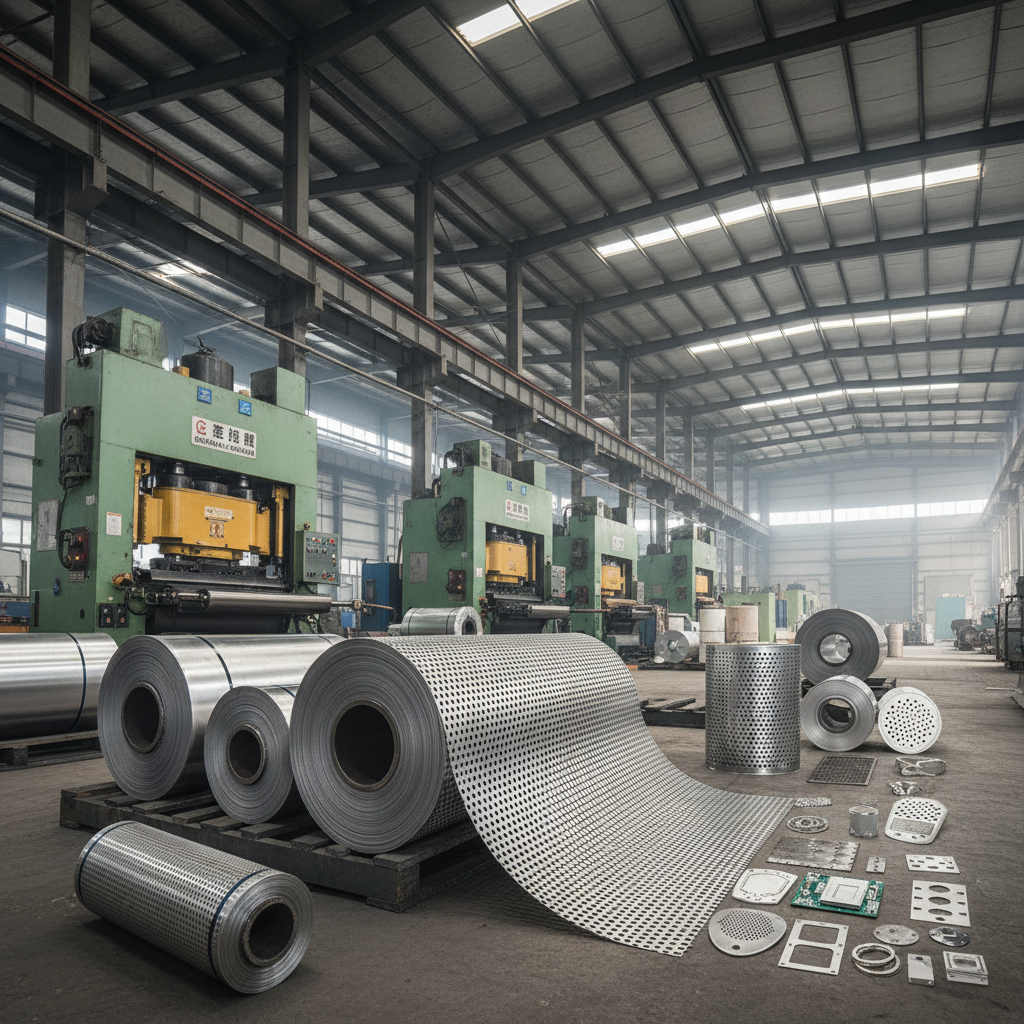
High Performance Wedge Wire Screen Perforated Sheet Supplier
Selecting a high-performance filtration system often comes down to the precision of the screen geometry and the resilience of the metallurgy. For industrial operations dealing with abrasive slurries, high-pressure oil recovery, or corrosive chemical processing, a standard mesh is rarely sufficient. This is where wedge wire wrapped screens provide a critical engineering advantage, utilizing V-shaped profiles to prevent blinding and ensure a self-cleaning action during fluid transit.
Whether you are managing sand control in horizontal wells or catalyst retention in petrochemical reactors, the synergy between material selection—such as Duplex 2205 or Hastelloy C-22—and precise slot calibration determines the operational lifespan of your equipment. As a professional perforated sheet supplier, TOMAIMESH focuses on delivering these high-tolerance components that meet stringent API and ISO benchmarks, ensuring that pressure drops are minimized while particle retention remains absolute.

Advanced Metallurgy and Structural Design for Extreme Environments
The efficacy of a wrapped screen is fundamentally tied to its material composition. In seawater desalination or acidic slurry filtration, 316L Stainless Steel is the standard due to its corrosion resistance (PREN ≥27). However, for offshore oil separators where chloride stress corrosion is a risk, Duplex 2205 and 2507 are employed, offering yield strengths between 550–800 MPa and superior PREN values (≥35). For the most aggressive environments, such as sulfuric acid recovery, Hastelloy C-22 is utilized for its unmatched resistance to oxidizing and reducing agents per ASTM G28.
Structurally, the "wedge" profile is the key. Precision-welded V-shaped wires (with pitches from 1–10 mm) create a tapered opening. This ensures that particles larger than the slot width cannot enter, while those that do pass through are not trapped, effectively eliminating the "blinding" effect common in traditional screens. To withstand extreme pressures—up to 200+ bar in oil and gas applications—laser-welded support rods (3–20 mm diameter) are integrated into the framework, providing the necessary radial strength to prevent collapse under load.

Optimizing Flow Dynamics and Operational Resilience
Operational efficiency in filtration is measured by the balance between flow rate and particle retention. High open areas (ranging from 15% to 40%) are engineered to minimize pressure drops (ΔP 0.3 bar), which is particularly critical when handling high-viscosity fluids like crude oil or dense pulp slurries. Precision is maintained through CNC slot calibration, achieving tolerances of ±0.05 mm, which is essential for pharmaceutical crystallization where micron-level accuracy is non-negotiable.
To further enhance performance, surface treatments are applied based on the industry. Electropolishing is used to reach a Ra ≤0.2 µm, ensuring hygienic compliance with EHEDG and 3-A standards for dairy and biopharma applications. For critical sand control screens, Hot Isostatic Pressing (HIP) is employed to eliminate micro-cracks, ensuring API 5CT compliance. These enhancements allow the screens to operate in extreme temperature ranges, from cryogenic LNG applications at -200°C to thermal oil recovery at 550°C, while maintaining pressure ratings up to ASME B31.3 Class 2500.
Industry-Specific Applications and Integration Logic
The versatility of wedge wire technology allows it to be adapted across diverse sectors. In the Oil & Gas industry, Duplex 2507 screens with 0.3 mm slots are deployed for horizontal well completions (API 19SS compliant), while 316L screens are used for produced water filtration. In Water Treatment, reverse osmosis pre-filtration relies on 2205 duplex screens with 1 mm slots to prevent intake clogging in desalination plants.
The Chemical and Power sectors demand even higher specifications. Catalyst retention in fixed-bed reactors often requires Hastelloy C-22 screens with 100 µm slots to meet ASME BPVC standards. In geothermal fields, titanium-clad screens are used to handle corrosive brines at temperatures reaching 450°C. For food-grade separation, such as brewery lauter tuns or sugar crystallization, sanitary-grade screens ensure purity and size classification according to FDA CFR 21 regulations. Integration is simplified through flanged or threaded ends compatible with ANSI B16.5 or ISO 7/1 standards.
Technical Selection Matrix for Wedge Wire Screens
| Material Grade | Primary Application | Slot Width Range | Key Performance Metric |
|---|---|---|---|
| 316/316L SS | Biopharma / Dairy | 0.1 – 5 mm | Ra ≤0.2 µm (Hygienic) |
| Duplex 2205/2507 | Offshore Oil & Gas | 0.3 – 1 mm | PREN ≥35 (Chloride Resist) |
| Hastelloy C-22 | Chemical Reactors | 100 µm – 2 mm | ASTM G28 Compliance |
| Carbon Steel (Coated) | Wastewater/Agri | 1 – 5 mm | NACE MR0103 Compliant |
| Titanium / Alloy 625 | Geothermal / Syngas | Application-specific | Up to 550°C Stability |
Quality Assurance and Precision Manufacturing Standards
Reliability in filtration begins with rigorous fabrication. Automated TIG resistance welding is utilized to ensure that weld deviations remain ≤0.1 mm, adhering to ISO 5817 standards. This prevents structural weaknesses that could lead to premature failure under high-pressure cycles. Every component undergoes CNC slot calibration to maintain dimensional accuracy within ±2%, ensuring that the particle cutoff point is consistent across the entire surface area of the screen.
Testing protocols are designed to simulate the harshest field conditions. Bubble Point Testing is conducted per ASTM E128 to validate slot integrity for particles as small as 10 µm. Additionally, hydrostatic burst testing is performed at 2x the rated working pressure (e.g., testing at 400 bar for a 200 bar system) to guarantee safety. TOMAIMESH provides full EN 10204 3.1/3.2 traceability and NORSOK M-650 compliance, giving engineers confidence in the material pedigree and structural integrity of every delivered unit.
Procurement Considerations for Specialized Filtration Components
When evaluating a perforated sheet supplier or wedge wire manufacturer, procurement managers should prioritize certifications and customization capabilities over base price. Because these screens are often integrated into multi-million dollar systems, the cost of failure far outweighs the initial investment. Buyers should verify if the supplier can provide custom radial, axial, or helical wraps for specific equipment like dewatering drums or fluidized bed reactors.
Key evaluation criteria should include the ability to source raw materials from recognized groups (such as Taigang or Baogang) and the presence of quality systems like AS 9100 or IATF 16949. Furthermore, the availability of technical support for drawing verification and the commitment to "Delivery on Time" are critical for avoiding costly project delays. Ensuring the supplier can provide full material traceability and validated test reports is the best way to mitigate risk in critical infrastructure projects.
Frequently Asked Questions on Wedge Wire Screens
What is the main difference between wedge wire and standard perforated screens?
Wedge wire screens feature a V-shaped profile that creates a tapered opening, allowing particles to pass through without getting stuck. Standard perforated screens have straight-through holes, which are more prone to "blinding" or clogging in slurry applications.
How do I choose between Duplex 2205 and 316L Stainless Steel?
Choose 316L for general corrosion resistance and hygienic applications (food/pharma). Choose Duplex 2205 if the environment involves high chlorides, seawater, or requires higher mechanical yield strength to withstand pressure.
Can wedge wire screens be customized for non-cylindrical shapes?
Yes, they can be fabricated into radial, axial, or helical wraps, as well as flat panels, depending on the requirements of the dewatering drum or reactor design.
What is the typical tolerance for slot width calibration?
High-precision screens typically maintain a tolerance of ±0.05 mm, ensuring micron-level accuracy for critical filtration processes in the pharmaceutical or chemical industries.
What certifications should I look for in a professional screen manufacturer?
Look for ISO 14001, AS 9100, and IATF 16949. For Oil & Gas, ensure compliance with API 19SS or NORSOK M-650 standards and EN 10204 3.1/3.2 material traceability.
How is the structural integrity of high-pressure screens validated?
Integrity is validated through hydrostatic burst testing, typically conducted at 2x the working pressure, and bubble point testing per ASTM E128 to ensure no leaks or slot deviations exist.
Technical References & Industry Standards
- ISO 5817: Welding Quality Levels for Imperfections
- ASTM E128: Standard Test Method for Bubble Point
- API Standards for Well Completion Equipment
- ASME B31.3 Process Piping Standards
Selecting the right filtration component is a balance of metallurgical science and precision engineering. By focusing on slot accuracy, material PREN values, and rigorous pressure testing, operators can significantly reduce downtime and enhance the purity of their industrial outputs.
Related Articles