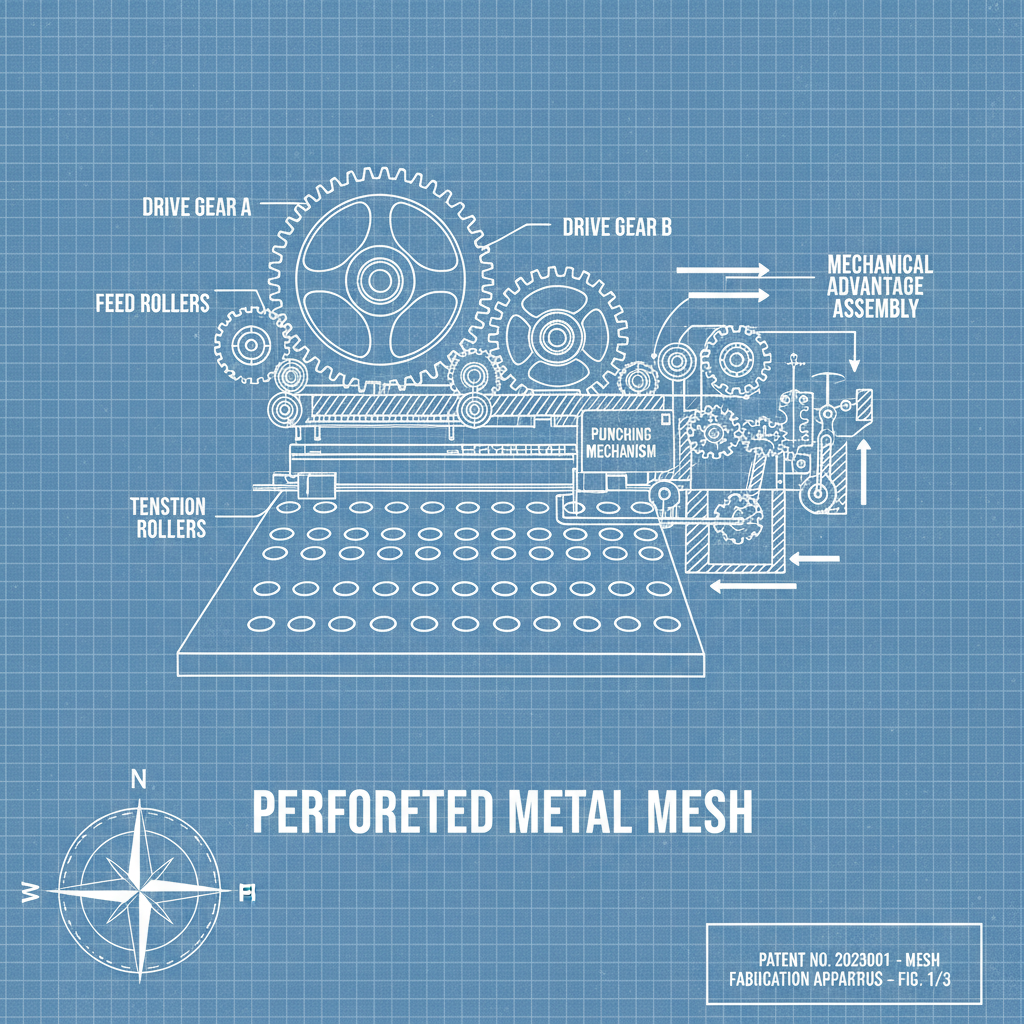
Selecting the right perforated metal components often comes down to a critical trade-off between structural rigidity and fluid flow efficiency. In high-stakes industrial environments, the difference between a standard punch and a precision-engineered plate can determine the lifespan of an entire filtration or safety system.
Modern procurement focuses less on finding a generic vendor and more on identifying specialized perforated plate suppliers who can integrate material science with custom CNC geometries. From managing chloride-induced pitting in offshore rigs to ensuring slip resistance on aircraft ramps, the technical specifications of the substrate are as vital as the perforation pattern itself.
This analysis explores the technical variables that define high-performance perforated plating, providing a framework for engineers and procurement managers to evaluate suppliers based on material integrity, surface treatment standards, and application-specific durability.


The utility of a perforated plate is fundamentally limited by its base metal. Aluminum alloys like 5052 and 6061-T6 are frequently selected for their exceptional weight-to-strength ratio, with densities around 2.7 g/cm³ and yield strengths reaching up to 310 MPa. This makes them the standard for weight-sensitive assets such as aircraft boarding ramps.
Conversely, stainless steel variants (304 and 316L) are deployed where thermal stability is non-negotiable. 316L, specifically, offers a Pitting Resistance Equivalent Number (PREN) between 19 and 35, which is critical for preventing localized corrosion in chloride-rich environments like desalination plants.
Open area ratio—the percentage of the plate that is void—is the primary driver of drainage and airflow efficiency. In typical industrial applications, this ratio ranges from 15% to 40%. Achieving this balance requires precision CNC punching to ensure that the remaining "bridges" of metal can still support the intended load without deformation, as tested under ASTM E2837 standards.
Beyond the ratio, the quality of the hole edge is a safety critical factor. Deburred edges with a surface roughness of Ra ≤1.6µm are essential to eliminate snagging risks in catwalks and machinery platforms. This level of precision prevents premature fatigue cracking at the stress concentration points around each perforation.
Customization of the hole geometry—moving from standard round holes to hexagonal or oval slots—allows for a hybrid approach where aesthetic alignment and functional load distribution are optimized simultaneously. This is particularly evident in ADA-compliant ramp covers where integrated lighting cutouts must not compromise the overall structural integrity.
The raw material provides the strength, but the surface treatment determines the operational lifespan. In high-traffic industrial zones, standard aluminum is often insufficient. The application of MIL-A-8625 Type III hard coat anodizing provides a wear-resistant layer that protects the substrate from abrasion and oxidation.
For pharmaceutical and food-grade facilities, electropolishing of stainless steel is the benchmark. This process removes microscopic surface impurities and creates a passivated layer that ensures hygienic compliance and prevents bacterial colonization in the perforated voids.
In contrast, architectural and safety applications often utilize powder coating with RAL-color-matched layers (60–80µm). When these coatings are infused with anti-abrasion additives, they provide a dual benefit of aesthetic branding and protection against UV degradation and chemical spills.
When evaluating perforated plate suppliers, it is helpful to view material capabilities through a relative index. The following data represents a qualitative assessment of how different materials perform across five key industrial metrics.
While aluminum excels in weight reduction and ease of installation, stainless steel remains the superior choice for high-temperature refinery walkways, retaining up to 85% of its tensile strength at 400°C (for 304) and 800°C (for 316L).
In the transportation sector, anti-skid perforated surfaces are indispensable for ship decks and EV charging station walkways. Here, diamond knurl patterns are often integrated into the perforation to exceed DIN 51130 R11-R13 slip resistance ratings, ensuring safety even in wet or oily conditions.
Agricultural applications present a different challenge: ammonia exposure. Slatted livestock flooring requires materials that resist chemical corrosion while maintaining high drainage efficiency to prevent waste pooling. In these scenarios, TOMAIMESH® provides tailored solutions using high-grade alloys that withstand the aggressive environment of manure drainage.
The transition from traditional mechanical punching to advanced CNC and chemical etching has expanded the possibilities for perforated mesh. While punching is ideal for thick plates and structural strength, etching allows for intricate, micron-level precision without the mechanical stress induced by a punch tool, which can sometimes warp the material.
Current trends show a shift toward modular compatibility. Perforated plates are now frequently delivered with pre-drilled bolt holes (M8–M16) or interlocking tabs, facilitating rapid installation in OSHA-compliant facilities. This modularity reduces on-site labor and minimizes the risk of installation errors.
Furthermore, the integration of edge reinforcement, such as folded hemming (90°–180° bends) or welded frames, has improved load distribution. This allows for thinner base materials to be used without sacrificing the overall load-bearing capacity of the catwalk or platform.
Choosing among various perforated plate suppliers requires a shift from price-centric procurement to a total-cost-of-ownership (TCO) model. A lower initial cost often masks deficiencies in deburring quality or material purity, which leads to higher maintenance costs and safety risks.
Key evaluation metrics should include the supplier's ability to provide certified material mill tests and their adherence to international standards such as ISO 14001 or IATF 16949. These certifications ensure that the raw materials, sourced from reputable groups like Taigang or Shougang, meet the required metallurgical specifications.
The following framework outlines the primary trade-offs when selecting materials and treatments based on the operational environment.
| Environment | Recommended Material | Critical Treatment | Primary Performance Metric |
|---|---|---|---|
| Marine/Offshore | Stainless 316L | Electropolishing | PREN (Pitting Resistance) |
| Aircraft/Aerospace | Aluminum 6061-T6 | Hard Anodizing | Weight-to-Strength Ratio |
| Refinery/Incinerator | Stainless 304 | Passivation | High-Temp Tensile Strength |
| Pharma/Hygienic | Stainless 316L | Electropolishing | Ra Surface Roughness |
| Industrial Safety | Carbon Steel/Alu | Powder Coating | DIN Slip Resistance |
| Cold Storage | Specialty Alloy | Textured Surface | -40°C Thermal Rating |
The open area is the ratio of the total area of the holes to the total area of the plate. For standard round holes, the formula is typically: (Number of holes per inch² × Area of one hole) × 100. This percentage is critical for determining flow rates in filtration and drainage efficiency in safety flooring. High-quality suppliers provide precise open-area calculations to ensure the product meets ASTM E2837 fluid dynamics requirements.
The primary difference is the addition of molybdenum in 316L, which significantly increases resistance to chlorides and pitting corrosion. While 304 is suitable for general industrial use and high temperatures, 316L is required for marine environments, chemical processing plants, and pharmaceutical facilities. In these settings, 316L's higher Pitting Resistance Equivalent Number (PREN) ensures a much longer operational lifespan.
Deburring removes the sharp edges (burrs) created during the punching process. This is critical for two reasons: first, it prevents injuries to personnel using the plate as a catwalk; second, it eliminates stress concentration points that could lead to fatigue cracking. Professional suppliers target a surface roughness of Ra ≤1.6µm to ensure the plates are safe and structurally sound for long-term load-bearing use.
Yes, provided the correct alloy and surface treatment are used. Aluminum 5052 is naturally resistant to saltwater, but for maximum durability, a MIL-A-8625 Type III hard coat anodizing is recommended. This creates a thick, protective oxide layer that prevents saltwater from penetrating the base metal, making it ideal for aircraft boarding ramps and ship deck components.
Punched plates are generally more cost-effective for thicker materials and provide higher structural rigidity, but they can introduce mechanical stress into the metal. Etched plates offer extreme precision for very small holes and complex patterns without warping the substrate. The choice depends on whether the primary requirement is structural load-bearing (punching) or precise filtration/aesthetic detail (etching).
Powder coating is a topical layer of polymer that provides excellent color options and chemical resistance; however, it can chip over time under heavy abrasion. Anodizing is an electrochemical process that integrates the protective layer into the metal itself, offering superior wear resistance and hardness. For high-traffic industrial zones, hard-coat anodizing is typically preferred over powder coating for its longevity.
The selection of perforated plates is an exercise in balancing material science, geometric precision, and environmental resistance. Whether the priority is the weight-saving capabilities of Aluminum 6061-T6 or the extreme thermal stability of Stainless 316L, the success of the installation depends on the synergy between the substrate and its surface treatment.
By focusing on verifiable metrics—such as PREN values, Ra roughness, and DIN slip ratings—industrial buyers can move beyond generic sourcing. Partnering with precision-driven perforated plate suppliers ensures that these components serve as reliable structural assets rather than potential points of failure.