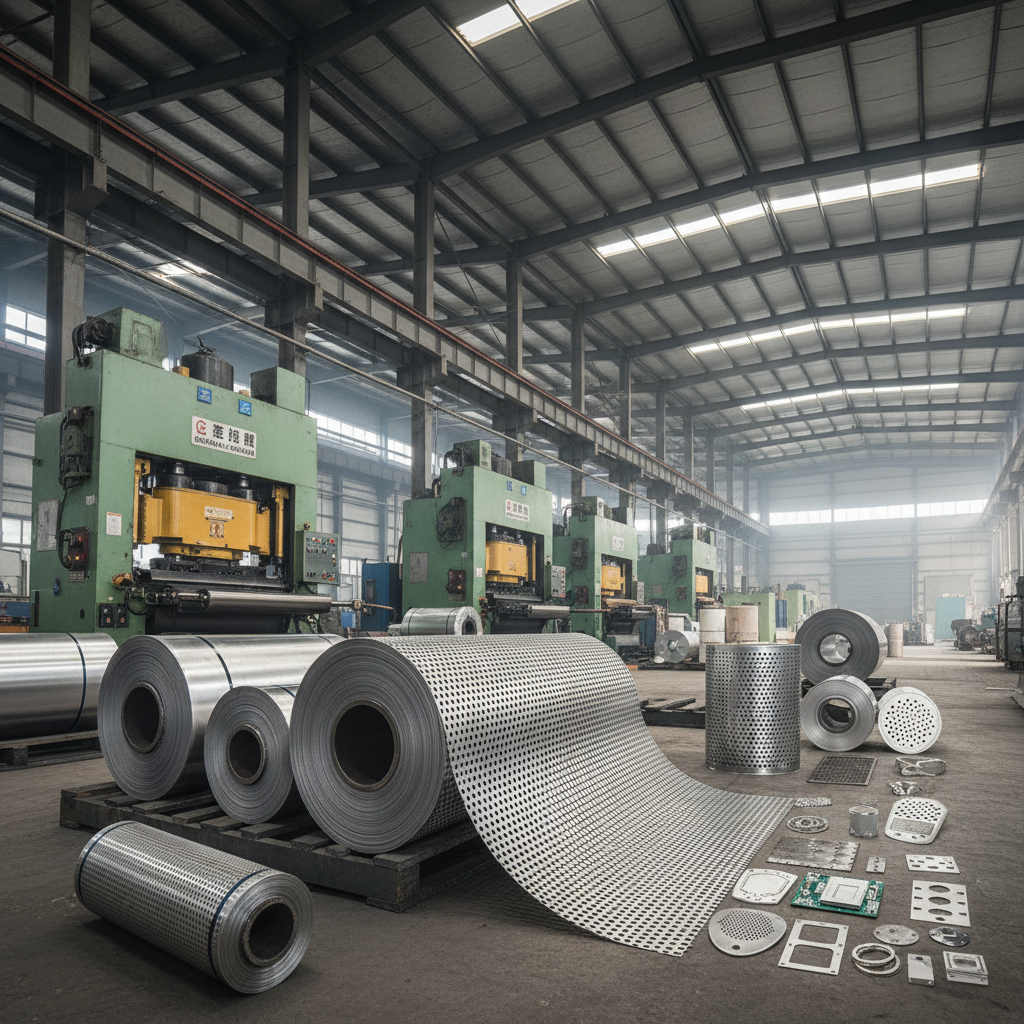
Selecting the right perforated metal panel manufacturers is a critical decision for engineers and architects operating within the structural metal products sector. These components serve as the intersection of functional engineering and aesthetic design, providing essential solutions for ventilation, filtration, and security in diverse architectural environments.
The primary challenge for procurement officers is balancing the trade-off between open area percentages and structural integrity. Poorly manufactured panels can lead to premature corrosion or mechanical failure, particularly in high-stress construction or safety-critical metalwork applications.
This analysis provides a professional framework for evaluating supplier capabilities, understanding material specifications, and matching perforation patterns to specific industrial requirements to ensure long-term operational reliability.

Defining Manufacturer Technical Capabilities

High-tier perforated metal panel manufacturers distinguish themselves through their ability to maintain strict dimensional tolerances across large production batches. In the context of structural metal manufacturing, precision is not merely about the hole diameter, but the consistency of the bridge width (the distance between holes), which directly dictates the load-bearing capacity of the panel.
TOMAIMESH leverages over 20 years of experience in metal woven and perforated products to deliver high-precision components. By utilizing professional raw materials from groups such as Taigang, Shougang, and Baogang, the production process ensures that the structural integrity of the metal is preserved during the punching phase, preventing micro-fractures that could lead to failure under stress.
Material Selection for Structural Durability
The choice of base metal is the most significant factor in determining the lifecycle of a perforated panel. While carbon steel is common for internal structural supports, 304 stainless steel is the industry standard for environments exposed to moisture or chemical agents due to its superior corrosion resistance. The chemistry of the alloy determines how the material responds to the punching tool; softer metals may deform, while overly hard alloys can cause tool wear, affecting hole circularity.
For specialized filtration needs, such as those seen in micro-mesh coffee filters or industrial separators, the use of high-grade 304 stainless steel ensures that the panels remain inert and durable. This material selection prevents contamination and resists oxidation, making it suitable for both food-grade applications and heavy-duty architectural safety barriers.
Critical Perforation Parameters and Logic
Understanding the relationship between hole size, pitch, and open area is essential for optimizing airflow and light transmission. The "Open Area Percentage" is the ratio of the total area of the holes to the total area of the panel. A higher open area increases permeability but reduces the mechanical strength of the structural panel, creating a technical trade-off that must be calculated based on the specific application load.
Beyond basic round holes, manufacturers offer staggered, inline, or custom decorative patterns. The logic behind choosing a staggered pattern is typically to maximize the open area while maintaining a higher level of structural rigidity compared to inline patterns. Precision in these calculations prevents the panel from buckling when installed as a facade or safety screen.
Comparative Performance Indices by Material
When evaluating different metal types for perforated panels, procurement teams often use normalized scoring to compare relative strengths in corrosion resistance, structural stiffness, and cost-effectiveness. The following conceptual framework illustrates how different common materials perform across these critical dimensions.
This illustrative index shows that while stainless steel excels in durability and corrosion resistance, galvanized steel provides a balanced middle ground for general construction. Aluminum, though lightweight, offers the lowest structural stiffness, making it more suitable for decorative rather than load-bearing safety panels.
Industry Application Mapping
The versatility of perforated metal panels allows them to be integrated into various sectors of the building and safety industry. In architectural facades, they provide solar shading and ventilation. In industrial settings, they are utilized for machine guards, acoustic dampening, and filtration systems. The specific requirement for the "perforation logic" changes based on whether the goal is particulate removal, air circulation, or security.
For instance, wedge mesh and expanded metal mesh are often preferred in high-pressure filtration environments, whereas standard perforated panels are ideal for architectural screens. By matching the product category—such as steel grating or perforated mesh metal—to the specific environmental stressor, companies can avoid over-engineering and reduce material waste.
Common Procurement Risks and Red Flags
A common risk when dealing with low-cost perforated metal panel manufacturers is the occurrence of "burrs"—small, sharp pieces of metal left behind after the punching process. If not properly deburred, these fragments can cause injury or lead to localized corrosion points. Another significant risk is the use of non-standard raw materials that do not meet the specified grade, which can lead to unexpected failure in corrosive environments.
Buyers should be wary of suppliers who cannot provide clear material certifications or those who lack standardized quality management systems. Reliability is ensured when a manufacturer is accredited to international benchmarks like ISO 14001 or IATF 16949, as these certifications indicate a controlled production environment and a commitment to consistent quality output.
Supplier Evaluation Framework
To make an informed decision, buyers should evaluate manufacturers based on a qualitative matrix that considers technical capacity, material sourcing, and after-sales support. This ensures that the chosen partner can handle both standard bulk orders and highly specialized custom drawings for complex structural projects.
| Evaluation Dimension | Standard Supplier | Premium Manufacturer | Critical Impact |
|---|---|---|---|
| Material Sourcing | Generic Local Steel | Certified Tier-1 Mill | Corrosion Lifespan |
| Tolerances | +/- 0.5mm | +/- 0.1mm | Fitment Accuracy |
| Customization | Fixed Patterns Only | Custom CAD Drawings | Design Flexibility |
| Quality Control | Visual Inspection | ISO/IATF Standards | Batch Consistency |
| Lead Time | Variable | Scheduled/On-time | Project Timeline |
| After-Sales | Basic Replacement | Technical Support | Operational ROI |
By utilizing this framework, procurement managers can move beyond price-based decision-making and instead prioritize total cost of ownership and technical reliability.
Frequently Asked Questions
The open area is calculated based on the hole diameter and the pitch (center-to-center distance). You must balance the need for airflow or light with the structural load the panel must support. Most manufacturers provide a chart to help you select the optimal ratio for your specific application.
Perforated metal is created by punching holes into a solid sheet, resulting in a flat surface with precise holes. Expanded metal is created by slitting and stretching the metal, resulting in a diamond-shaped mesh with a three-dimensional texture and generally higher rigidity for its weight.
For outdoor environments, 304 or 316 stainless steel is highly recommended due to its inherent resistance to oxidation and atmospheric corrosion. Alternatively, hot-dip galvanized steel can be used for cost-effectiveness in less aggressive environments.
Yes. By adjusting the hole size and percentage of open area, panels can be engineered to absorb or deflect specific sound frequencies. These are often used in combination with acoustic backing materials in industrial settings.
Ensure your manufacturer employs professional deburring processes, such as tumbling, grinding, or chemical etching. High-quality manufacturers use precision tooling and post-processing to ensure all edges are smooth and safe.
Yes, the weight is directly proportional to the amount of metal removed. A higher open area percentage reduces the overall weight of the panel, which can be an advantage for ceiling installations or lightweight facades.
Conclusion
Selecting a partner among perforated metal panel manufacturers requires a shift from simple cost-comparison to a technical evaluation of material sourcing, punching precision, and quality certifications. By focusing on the relationship between open area and structural integrity, and ensuring the use of high-grade alloys like 304 stainless steel, businesses can ensure their architectural and safety components withstand long-term environmental and mechanical stress.
For organizations seeking precision-engineered metal solutions and custom design capabilities, detailed product specifications and technical support can be reviewed at www.tomaifilters.com to ensure your project meets all industry benchmarks.